
Energy bills keep climbing. Building materials end up in landfill. Kitchens get renovated, only to need replacing again in a few years because the finishes weren’t built to last. Sustainable kitchen design addresses all 3 of these problems whilst creating a space that works better for how you actually live.
The approach involves selecting materials that last, installing appliances that cut ongoing costs and designing for longevity rather than trends. These decisions reduce environmental impact while delivering tangible benefits: lower utility bills, healthier indoor air, and a kitchen that maintains its value over decades.
Material Choices That Last
Cabinetry represents the largest material investment in most kitchen renovations. Sustainably sourced timber ensures your cabinets come from responsibly managed forests rather than old growth logging. Look for FSC or PEFC certification stamps when selecting joinery.
Bamboo offers another durable option, particularly for flooring and this is because it reaches harvest maturity in 3 to 5 years compared to hardwood’s decades long growth cycle, and if properly manufactured bamboo flooring can outlast many traditional hardwoods. Check that bamboo products are formaldehyde free and sourced from certified plantations.
Benchtop selection matters for both durability and environmental impact and recycled glass composite benchtops divert waste from landfill while providing a non-porous, heat resistant surface that lasts for decades. Recycled timber benchtops bring warmth and character, though they require regular oiling to maintain water resistance. Reconstituted stone made with recycled content offers another alternative to virgin quarried materials.
Paint and finishes affect indoor air quality long after installation. Low-VOC (Volatile Organic Compound) or zero-VOC paints release fewer harmful chemicals into your home. Water-based polyurethanes and natural oil finishes for timber provide durable protection without the off-gassing associated with traditional solvent-based products.
Appliances That Reduce Running Costs
A modern energy efficient refrigerator uses roughly half the electricity of a model from 15 years ago. When selecting appliances, check the Energy Rating Label as each additional star represents approximately 25% better efficiency than the previous rating. A 4 star fridge costs substantially less to run annually than a 2 star model.
Induction cooktops transfer heat directly to cookware through electromagnetic fields, wasting far less energy than gas or conventional electric elements. They boil water faster, respond immediately to temperature changes, and stop heating the moment you remove the pan.
Dishwasher selection should prioritise both energy and water ratings. Modern machines with high WELS stars use as little as 9 litres per cycle compared to 20+ litres in older models. Many include soil sensors that adjust water use based on how dirty the dishes actually are, avoiding waste on lightly soiled loads.
Range hoods with high extraction rates and low noise levels encourage better ventilation habits. Proper ventilation prevents moisture damage to cabinetry and removes cooking pollutants that affect indoor air quality. Models with DC motors use considerably less power than older AC motor designs.
Lighting Design That Works With Natural Light
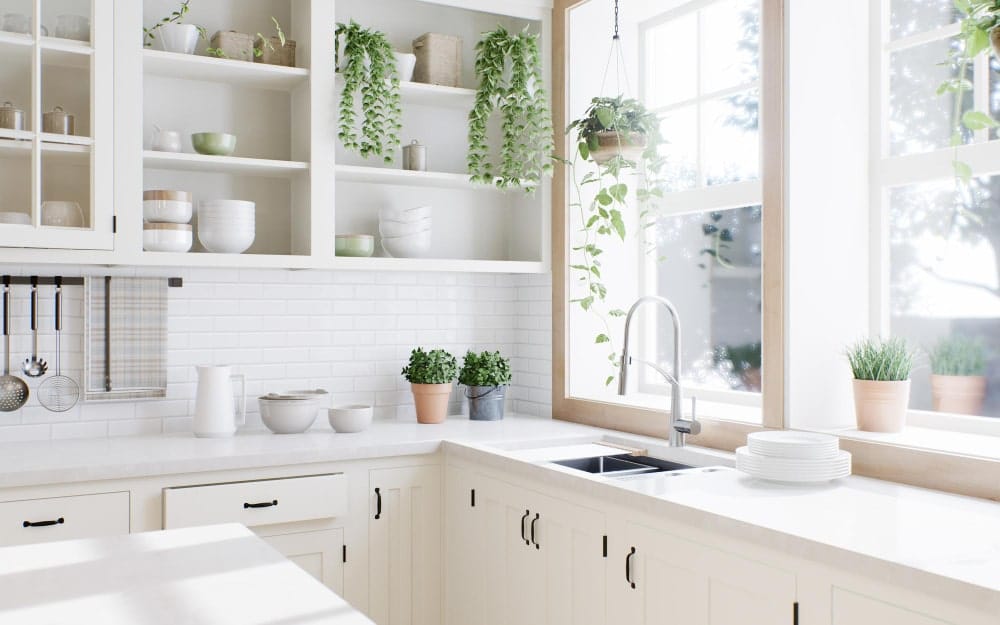
North facing windows bring consistent natural light into kitchens throughout the day, reducing reliance on artificial lighting. Skylights add brightness to interior kitchens without external wall access, though proper placement matters so avoid western skylights that create harsh afternoon heat in Queensland’s climate.
LED downlights and strip lighting now offer warm colour temperatures that match traditional incandescent bulbs while using 80% less electricity. They also last 15 to 20 years under typical use, eliminating the repeated replacement cycle of halogen or fluorescent alternatives. Dimmable LED systems let you adjust brightness based on time of day and task requirements.
Under cabinet LED strips provide targeted task lighting for food preparation without needing to illuminate the entire room, plus they add depth to the space and look amazing. This zoned lighting approach means you use only the light you need, when you need it.
Water Conservation in Daily Use
Kitchen taps with flow rates around 6 litres per minute provide adequate pressure for washing while using 30% less water than standard taps running at 9 litres per minute. Aerators mix air into the water stream to maintain comfortable pressure at lower flow rates.
Pull-out spray taps with pause buttons let you stop water flow while scrubbing dishes without readjusting temperature when you resume. This simple feature prevents the wasteful practice of leaving taps running during the washing process.
Waste Management Built Into Design
Integrated waste systems make sustainable habits easier to maintain. A pull-out drawer system with separate bins for general waste, recycling and compost keeps sorting convenient and out of sight. Allocating adequate space for these systems during design prevents the cluttered appearance of multiple bins scattered around the kitchen.
In-sink waste disposal units grind food scraps that then process through sewage treatment, though this approach depends on your local water authority’s systems. For properties with garden space, dedicated compost bins offer a more direct path from kitchen scraps to garden nutrients.
Soft-close drawers and hinges reduce wear on cabinetry, extending its functional life. Quality hardware costs more upfront but prevents the sagging doors and sticking drawers that often trigger premature kitchen replacements.
Design Longevity Over Trends
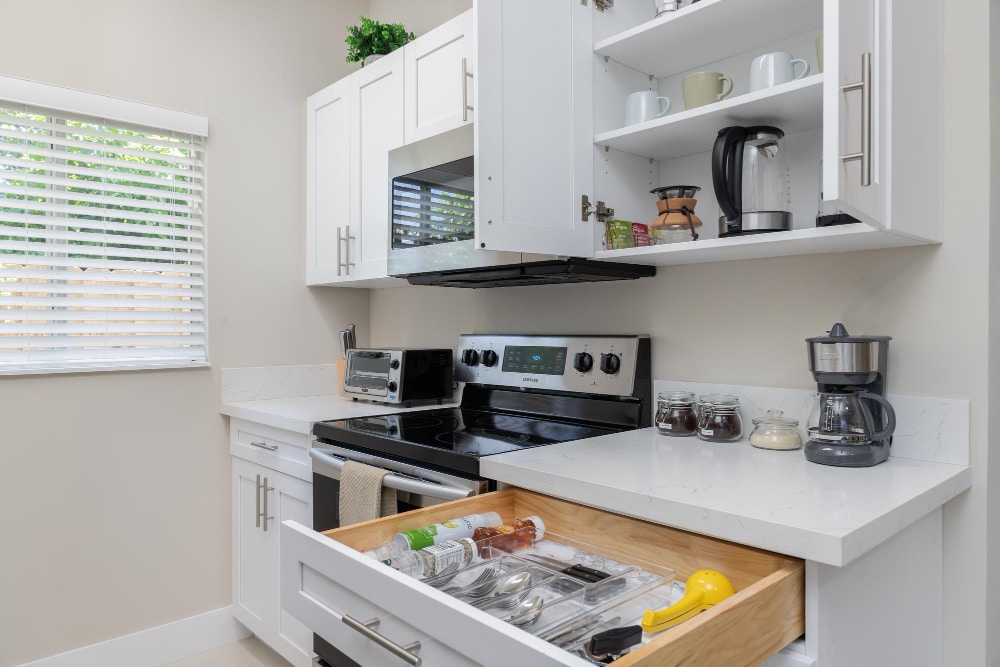
Neutral colour palettes and classic cabinet profiles remain appealing across decades, while trendy colours and ornate detailing can date quickly. This matters because the most sustainable kitchen is one that doesn’t need replacing. Stone, white, grey and natural timber tones provide a foundation that works with changing décor preferences.
Modular cabinetry systems allow future modifications without complete replacement. Adding or reconfiguring a section costs less than gutting an entire kitchen that no longer suits your needs.
Solid construction methods (like dovetail drawer joints and face-framed cabinets) withstand daily use far better than the cam-lock assembly common in flat-pack options. These traditional techniques cost more initially but deliver kitchens that remain structurally sound for 20 to 30 years.
Overall sustainable kitchen renovations protect your investment through reduced operating costs and extended replacement cycles. For residents in Brisbane planning a kitchen renovation, sustainable design principles create spaces that work better while costing less to operate, feel free to get in touch to discuss how sustainable choices could work in your renovation.